Understanding GeM seller caution money and seller account terms and conditions is key when trading and bidding on the Government e-Marketplace. Many sellers are unsure how GeM seller caution money bands are determined by a seller’s annual turnover. Initially, GeM operated a system whereby sellers had to place a refundable caution money payment in order to ensure sellers adhered to the marketplace and did not renege on contracts once awarded. More recently, the minimum caution money has been set at zero for all seller and service providers. Sellers currently holding caution money can then also claim back this amount. Therefore, it is important to be aware of caution money bands and the current claim-back procedure. GeM Seller Caution Money Bands A seller’s caution money requirement was determined by their annual turnover from last financial year. This information is sourced from a seller’s Income Tax Return (ITR) and displayed on their GeM seller profile. Seller Category / Annual Turnover Required Caution Money Payment Current Minimum Caution Money Requirement New Sellers / <1 Cr ₹5,000 Revised to: ₹0 Turnover of 1-10 Cr ₹10,000 Revised to: ₹0 Turnover >10 Cr ₹25,000 Revised to: ₹0 Exempt Sellers (SHGs, Artisans, Weavers, MSE Women, MSE SC/ST) ₹0 (Exempt) ₹0 A seller’s caution money band applied for an entire financial year irrespective of whether their turnover rose during this period. Caution Money Terms and Conditions Unlike Earnest Money Deposits (EMD) and Performance Bank Guarantees (PBG), GeM seller caution money operates in the following way; • Virtual Escrow Account: Sellers credit their GeM seller profile with caution money which is then electronically placed into a virtual escrow account. • No Interest: The caution money is then kept in this virtual escrow account as a form of security and does not attract bank interest. • Evergreen Status: Provided there is no penalty or forfeiture, a seller’s caution money continues to apply to all live catalogue items and bids – there is no requirement to re-apply caution money for each new bid. • Distinct from EMD: Although caution money is for general adherence to marketplace terms and conditions, if a particular high value bid requires sellers to provide an EMD or Performance Security, then this still needs to be provided in addition to caution money. Caution Money Forfeiture Scenarios GeM has established stringent guidelines to ensure sellers comply with the pricing and delivery times specified. Should a seller do not comply with post-bid and/or order terms, GeM has the authority to impose a penalty and/or forfeit part or all of a seller’s caution money. This may occur if a seller; • Does not/ignores Direct and/or L1 orders: Does not accept a Direct or L1 comparison order within the permitted timeframe resulting in the system automatically voiding that order. • Does not deliver following order acceptance: Signs a contract on GeM but does not deliver the relevant product/service within the stipulated time frame. • Reneges on a bid: Removes a bid from the marketplace prior to a buyer finalising assessments and allocating a contract. • Does not provide Performance Security: Wins an e-Bid or Reverse Auction but does not promptly provide the necessary Performance Bank Guarantee (PBG). Persistent non-acceptance of orders and/or non-compliance with bids can result in more severe consequences than just caution money penalties. These may include seller account suspension and/or black listing. To find out further about how public sector procurers assess seller non-compliance and seller capability, please refer to our blog on tender blacklisting and debarment regulations. How to Assess and Claim Back Caution Money on GeM As the minimum caution money payment has now been lowered to zero, sellers who had previously paid caution money of either ₹5,000, ₹10,000 or ₹25,000 can claim back this money to their bank account. This is achieved by; • Signing into Your GeM Seller Account: Access your seller account and select ‘Manage Caution Money Account’ from within your profile or payments section. • Redetermine Threshold: Click on ‘Recalculate Threshold’ so that the GeM portal amends your minimum caution money requirement to show as zero. • Confirm Bank Details: Ensure that your main bank account details are up-to-date and confirmed as verified on GeM via the PFMS system. • Claim Surplus Funds: Click on ‘Withdraw Excess Funds’, input the amount of caution money that is in surplus and confirm so that this is then directly transferred back to your nominated bank account. Being aware of GeM seller caution money bands, terms and conditions and scenarios for forfeiture, means that you can avoid unecessarily having orders voided. Furthermore, you can reclaim any surplus caution money that is currently in your seller account. To analyse live public sector procurement activity on GeM and central and state portals, search for relevant government tenders on Tender18 to monitor forthcoming tenders in your area of expertise.

Related Blogs
GeM Tender Bidding Guide
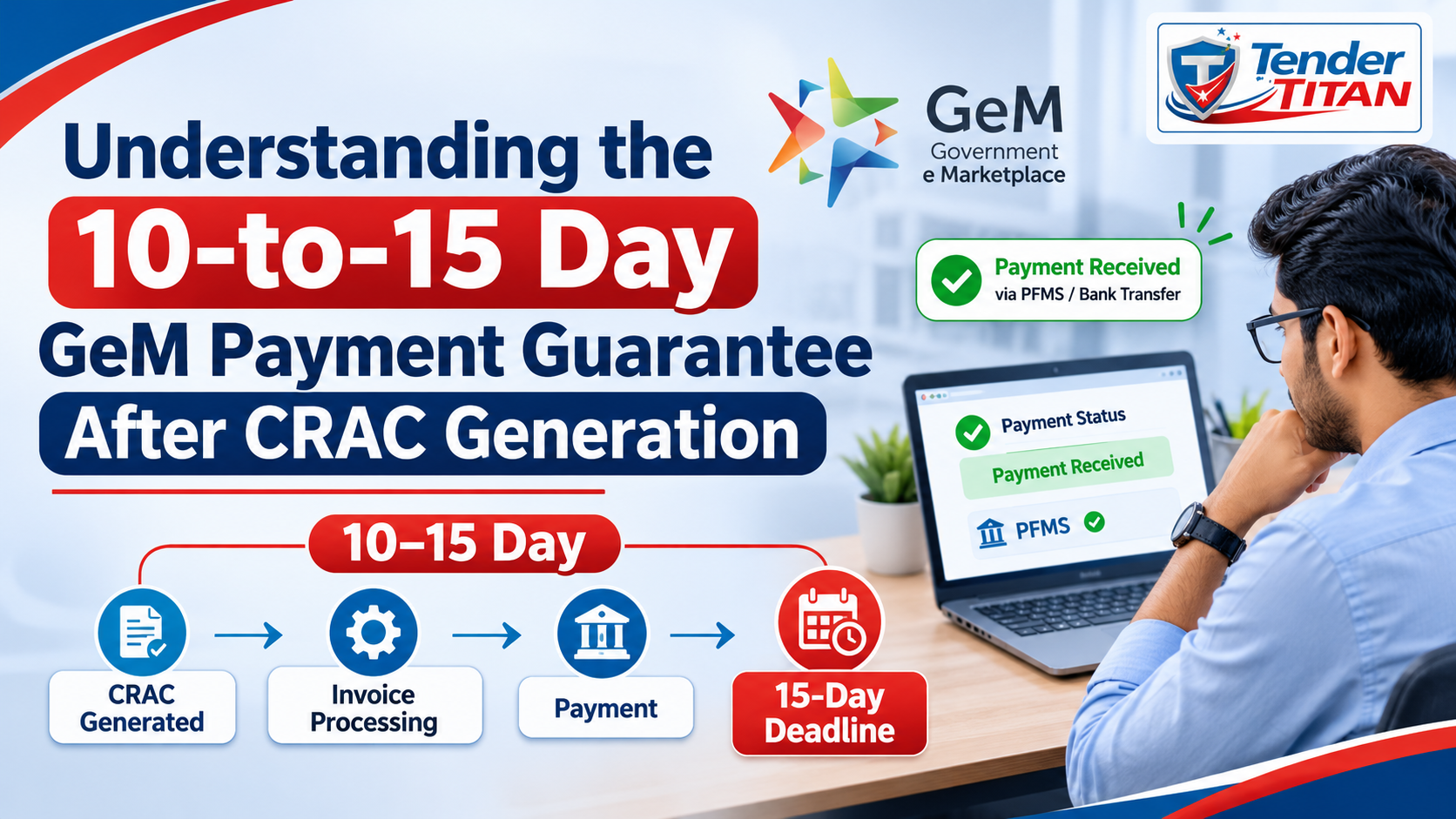
Understanding the 10-to-15 Day GeM Payment Guarantee After CRAC Generation
A step-by-step guide to the 10-to-15 day GeM payment procedure after Consignee Receipt and Acceptance Certificate (CRAC) generation, covering timeline stages, delay reasons, and how to escalate overdue payments.

GeM Portal & Compliance
BIS and IS Certification Rules on GeM: Categories That Require Valid Licenses
A complete guide to BIS and IS certification rules on the Government e-Marketplace (GeM), covering ISI and CRS schemes, regulated categories, and real-time license verification.
Tender Blacklisting
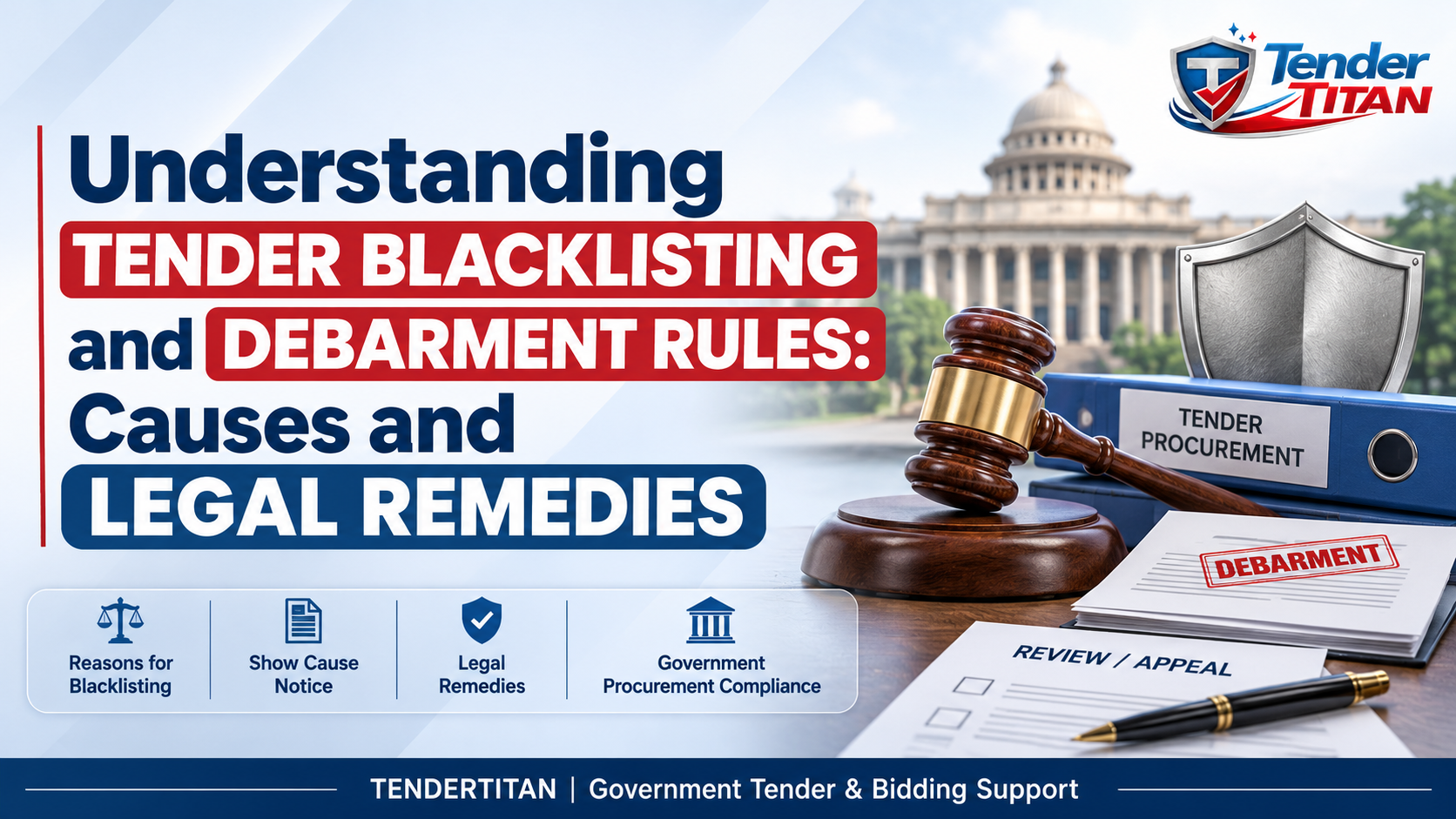
Understanding Tender Blacklisting and Debarment Rules: Causes and Legal Remedies
A complete guide to tender blacklisting and debarment rules in India under GFR Rule 151, covering key causes, mandatory natural justice steps, and legal remedies for contractors.